Professional commercial display solution provider

Why Retail Stores Use Shelf Edge Displays | Smart Bar LCD Solutions for Modern Retail
Why Retail Stores Use Shelf Edge Displays
Retail stores are changing quickly. Traditional paper price tags and static shelf labels are no longer enough in a market that demands speed, flexibility, and better customer experience. This is why more businesses are switching to shelf edge displays.
From supermarkets to convenience stores, electronics chains, pharmacies, and department stores, digital shelf technology is becoming a key part of modern retail operations. A shelf edge display helps retailers update prices instantly, promote products dynamically, and create a smarter shopping environment.
In 2026, stores are under pressure to improve efficiency while reducing labor costs. At the same time, customers expect accurate pricing, clear promotions, and a more interactive shopping experience. This is where bar LCD display technology becomes highly valuable.
What Are Shelf Edge Displays?
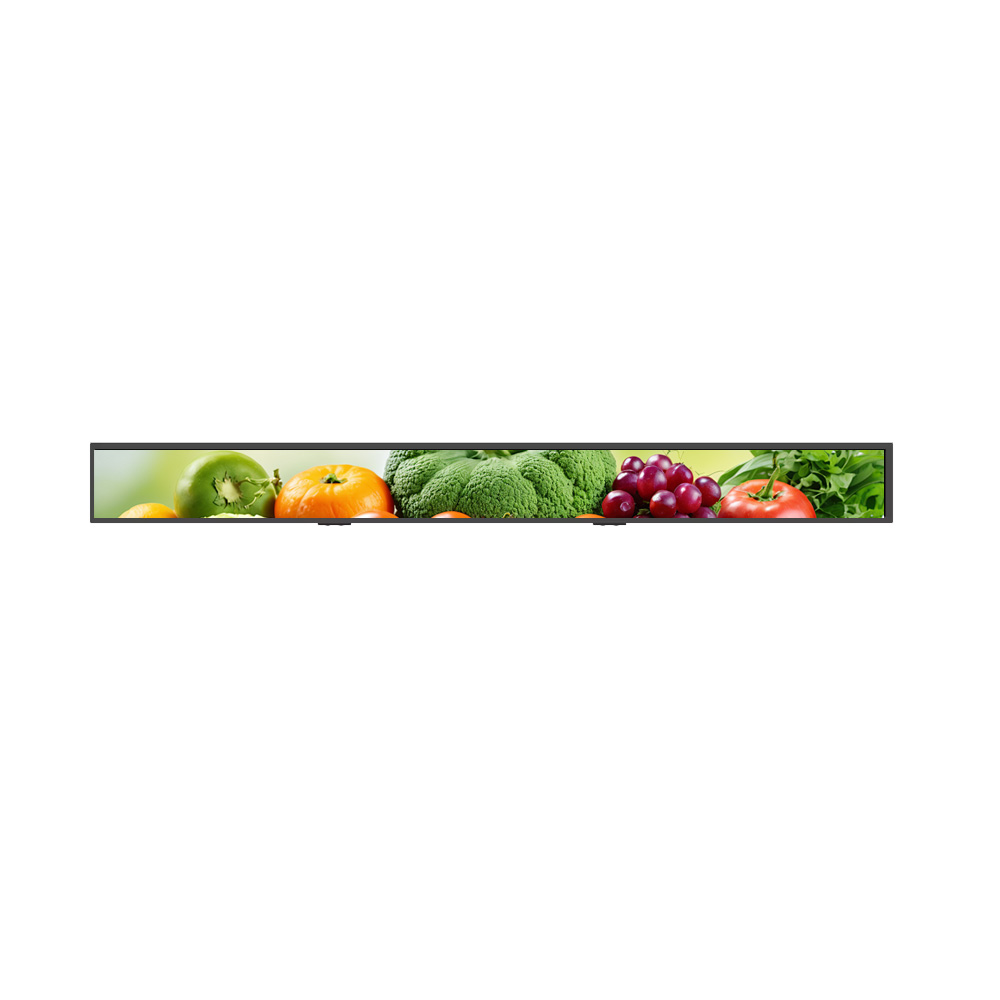
A shelf edge display is a narrow digital screen installed along store shelves to replace paper labels or static signage. These displays are usually based on stretched LCD display technology with ultra-wide formats that fit perfectly on shelf edges.
They can show:
- Product names
- Prices
- Discounts
- Promotions
- QR codes
- Inventory status
- Membership offers
- Real-time advertisements
Unlike paper tags, digital shelf edge displays can be updated centrally through software, making store management much faster and more accurate.
Why Retail Stores Use Shelf Edge Displays
1. Instant Price Updates Across Multiple Locations
One of the biggest challenges for retailers is changing prices quickly.
Traditional paper labels require staff to print new tags, walk through aisles, remove old labels, and install new ones. This process is slow, expensive, and often leads to mistakes.
With shelf edge displays, prices can be updated in real time across one store or hundreds of locations at once.
Benefits include:
- Faster price adjustments
- Reduced manual labor
- Better promotion timing
- Fewer pricing errors
- Improved operational efficiency
For chains running weekly promotions, this creates major savings.
2. Better Customer Experience
Shoppers want clear pricing and easy product information.
A digital retail shelf display gives customers a cleaner and more modern shopping experience. Instead of faded paper labels or confusing handwritten promotions, customers see bright and clear digital content.
Stores can display:
- Large price numbers
- Multi-buy offers
- Product benefits
- Nutrition details
- QR codes for reviews
- Loyalty member discounts
This helps customers make faster buying decisions.
3. More Effective Promotions
Traditional labels are passive. Digital shelf displays are active marketing tools.
A bar LCD display can highlight:
- Limited-time offers
- Buy one get one free deals
- Flash discounts
- New arrivals
- Seasonal campaigns
- Cross-selling suggestions
For example:
“Buy pasta today and get 20% off sauce.”
This creates more impulse purchases directly at the shelf.
4. Reduced Labor Costs
Retail stores spend many hours every week replacing labels.
Using digital shelf edge displays, staff no longer need to manually update thousands of paper tags. Instead, they can focus on:
- Customer service
- Stock management
- Merchandising
- Checkout efficiency
Over time, this can significantly lower labor costs, especially for supermarkets with large SKU counts.
5. Stronger Brand Image
Modern retail environments matter.
When customers enter a store with digital shelf displays, it feels more advanced, organized, and premium. This improves brand perception and helps stores compete with e-commerce platforms.
A smart store layout with shelf edge displays communicates innovation and professionalism.
Industries Using Shelf Edge Displays
Supermarkets
Large supermarkets use digital shelf systems to manage thousands of changing prices.
Convenience Stores
Compact stores benefit from fast updates and space-efficient screens.
Electronics Retailers
Displays can show specs, comparisons, and promotions.
Pharmacies
Useful for pricing, regulated notices, and rotating promotions.
Department Stores
Can support seasonal campaigns and product launches.
Why Bar LCD Displays Are Ideal for Shelf Edge Use
Not every screen fits a shelf.
A standard monitor is too tall, too bulky, and visually intrusive. A bar LCD display is designed specifically for narrow horizontal spaces.
Advantages include:
- Slim ultra-wide design
- Commercial-grade durability
- Clear text visibility
- Easy integration into shelving
- Long operating life
- Low power consumption
This is why stretched LCD technology has become the preferred solution for digital shelf systems.
If you are sourcing solutions for retail projects, explore our bar LCD display products for supermarket and commercial use.
Key Features Retailers Should Look For
When selecting shelf edge displays, buyers should consider the following:
Screen Size
Popular sizes include:
-
23.1 inch
- 28.6 inch
- 47.6 inch
- Custom lengths
Brightness
Stores with strong lighting may need 700+ nits brightness.
Resolution
High resolution improves text clarity and pricing readability.
CMS Compatibility
Cloud-based management allows centralized updates.
Mounting Options
Ensure compatibility with existing shelving systems.
Long-Term Supply
Important for multi-store rollouts and maintenance consistency.
How Shelf Edge Displays Increase Sales
Retailers adopt technology for one reason: results.
Studies and industry feedback show digital shelf systems can improve sales by:
- Better promotion visibility
- Faster reaction to competitor pricing
- More impulse purchases
- Better campaign consistency
- Reduced out-of-stock confusion
For example, a supermarket can run a weekend flash promotion in seconds across every aisle.
That speed creates measurable revenue opportunities.
Shelf Edge Displays vs Paper Labels
| Feature | Shelf Edge Displays | Paper Labels |
|---|---|---|
| Price Updates | Instant | Manual |
| Promotion Flexibility | High | Low |
| Labor Cost | Lower | Higher |
| Appearance | Modern | Traditional |
| Accuracy | High | Error-Prone |
| Customer Engagement | Strong | Weak |
Why 2026 Is the Right Time to Upgrade
Retail competition is stronger than ever.
Stores are facing pressure from:
- Online pricing competition
- Rising labor costs
- Demand for efficiency
- Need for data-driven operations
- Customer expectations for smarter shopping
Installing shelf edge displays is no longer only for large global chains. Mid-sized retailers are now adopting the same technology.
Why Choose Duobond Display
At Duobond Display, we support retail technology integrators and commercial customers with professional bar LCD display solutions.
We offer:
- Multiple stretched LCD sizes
- High brightness options
- Stable industrial supply
- OEM / ODM customization
- Touch integration support
- Project-based engineering assistance
Whether you need one pilot project or nationwide deployment, we can support your retail display needs.
FAQ
What are shelf edge displays used for?
They are used to show prices, promotions, product details, and digital content along store shelves.
Are shelf edge displays expensive?
Initial investment is higher than paper labels, but long-term labor savings and sales gains often justify the cost.
Can shelf edge displays be managed remotely?
Yes. Many systems support cloud or centralized software control.
What display type is best for shelf edge use?
A bar LCD display is usually the best option due to its narrow wide-screen format.
Are they suitable for supermarkets?
Yes. Supermarkets are one of the biggest users of digital shelf edge systems.
Final Thoughts
Retail stores use shelf edge displays because they improve efficiency, accuracy, customer experience, and promotional performance.
As pricing becomes more dynamic and stores seek smarter operations, digital shelf technology will continue to grow rapidly. For retailers looking to modernize stores and increase competitiveness, shelf edge displays are a practical and profitable upgrade.
Recommended reading
 2025-12-29Commercial LCD Display Industry Trends and Market Insights for 2026
 2025-12-23Why Custom Commercial Displays Are Becoming Standard in Modern Systems
 2025-12-17Advancing Outdoor Visual Systems with High-Brightness, Wide-Temperature LCD Technology
 2025-12-10Outdoor Commercial LCD Modules for Wide Temperature High-Brightness Advertising Displays
 2025-12-0215,6-Zoll 4K Medical Display Module für hochpräzise diagnostische Bildgebung


Products
Commercial LCD Display
Gaming LCD Module
High Resolution Medical Display
Outdoor Display
E-ink LCD Display
Desk VR Monitor
OLED Display
Total Solutions
Service
Custom Touch Screen Solutions
Customized Frames & Protective Cover Glass
LCD Driver Board & Accessory Customization
Contact us
Contact Us
Copyright © 2025 Shenzhen Aptus Technology Co.,Ltd All Rights Reserved.

-
Inquire
- Top